Building Trust at the Speed of Change
How can museums and cultural arts institutions create trusted spaces through the built environment when capital projects often lag behind the pace of societal change?
The Springfield Art Museum is a story of how a masterplan originally developed in 2018 was re-envisioned in 2023 to meet the moment — guided by collaborative dialogue, community trust-building, and a lens of equity, access, and resilience.
The project, now beginning its second phase of design in 2026, has navigated the crosscurrents of societal change and the subsequent emerging needs of arts environments, while staying true to the Museum’s original vision of a museum that builds belonging for all.
The Springfield Art Museum is the one of the oldest cultural institutions in Springfield, MO. Through the vision of Deborah Weisel and the female-founded group “The Art Study Club,” the Springfield Art Museum was started in 1928 with the goal to create a space where art and beauty could inspire everyone. Over the next several decades, the Museum would serve the Springfield community as a significant arts destination, growing its collection from 20 works of art showcased within borrowed spaces to over 10,000 works of art within the Springfield Art Museum’s facility adjacent to Phelps Grove Park. In 2017, as the Museum was approaching its 90th year, they engaged BNIM to create a master plan envisioning a Museum for all in Springfield.
Building Beginning: A Master Plan
Springfield Art Museum and BNIM began our collaboration in 2017, setting out to develop a master plan that would guide the Museum’s future growth over the next several decades. From the beginning of the planning process, the Springfield Art Museum focused on creating a museum for all, guided by a series of core project values and the key design principles of porosity, flexibility, and balance/unity.
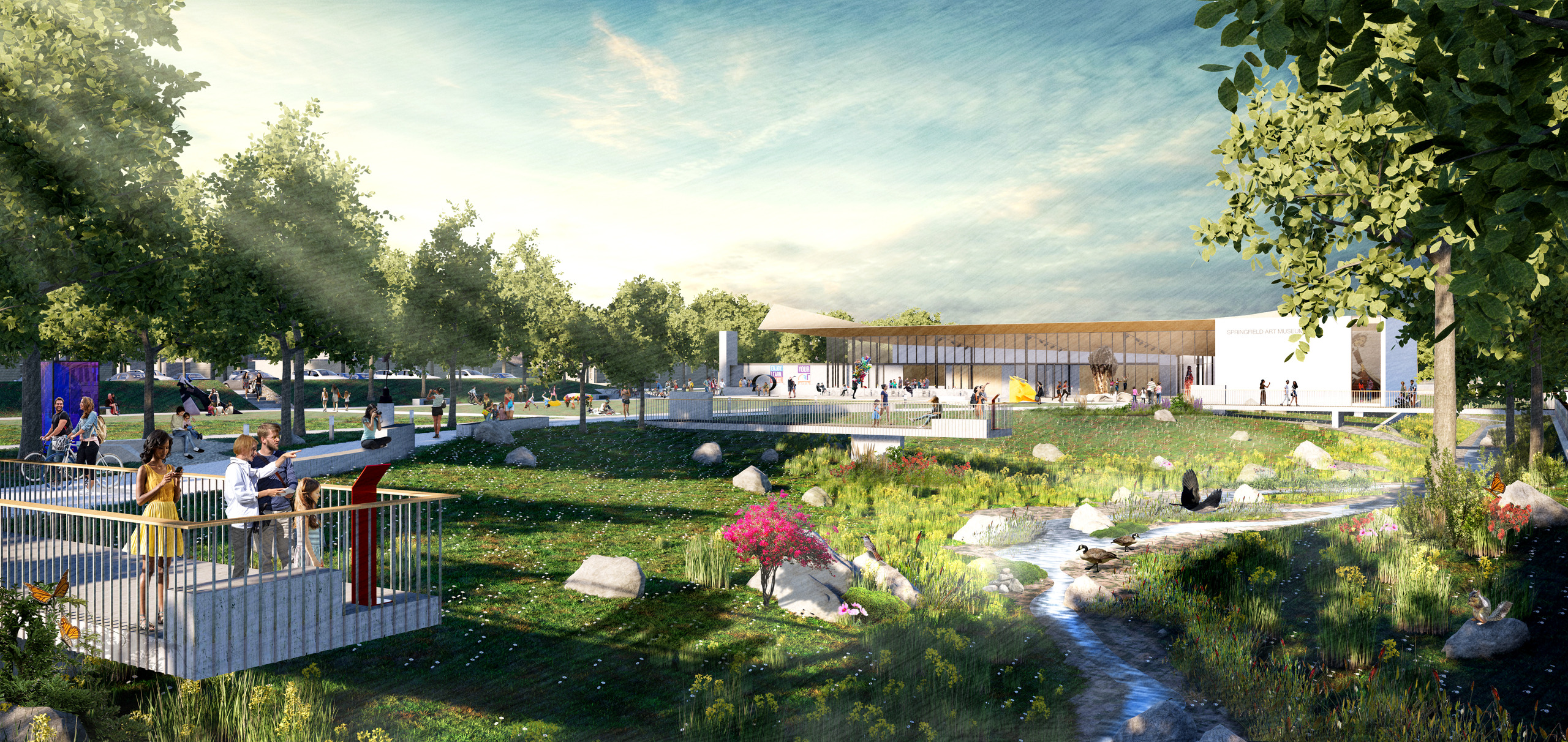
Immersed in the unique landscape of the Ozarks, the Springfield Art Museum is sited on a 30+ acre urban park originally designed by George Kessler. BNIM worked with the Museum leadership exploring the overall site design, developing a building diagram that integrated Phelps Grove Park into the Museum experience, interweaving ‘land and sky’ as one moves through the space. The master plan envisioned a “porous loop” that would provide visual and physical connections to the landscape and the adjacent Fassnight Creek, enabling visitors to experience the natural beauty of the Ozarks.
Three areas of study for growth focused on:
Education: The renovation, replacement, and/or expansion of the existing education wing
Visitor experience: Renovation of the existing building to improve visitor and staff experience
Connection to site and nature: Improvements to the campus to better connect the Museum to surrounding amenities and the natural landscape
Building Consensus: Re-envisioning
In July 2023 the Springfield Art Museum and BNIM team reconvened to revisit the vision and concepts developed in the 2018 Master Plan. Given the lapse of time, which included the Covid pandemic, the Museum and design team re-evaluated the operational impacts and societal parameters that had evolved since the master planning process concluded.
It called on us to acknowledge and address these changes head-on, to build consensus within the community, and to re-envision what was truly important, necessary, and possible in designing a museum for all.
A key focus of re-envisioning the master plan for Springfield Art Museum involved deep listening and understanding of how built environments impact the human experience, and in particular, the role museums hold in creating spaces of belonging, well-being, and community.
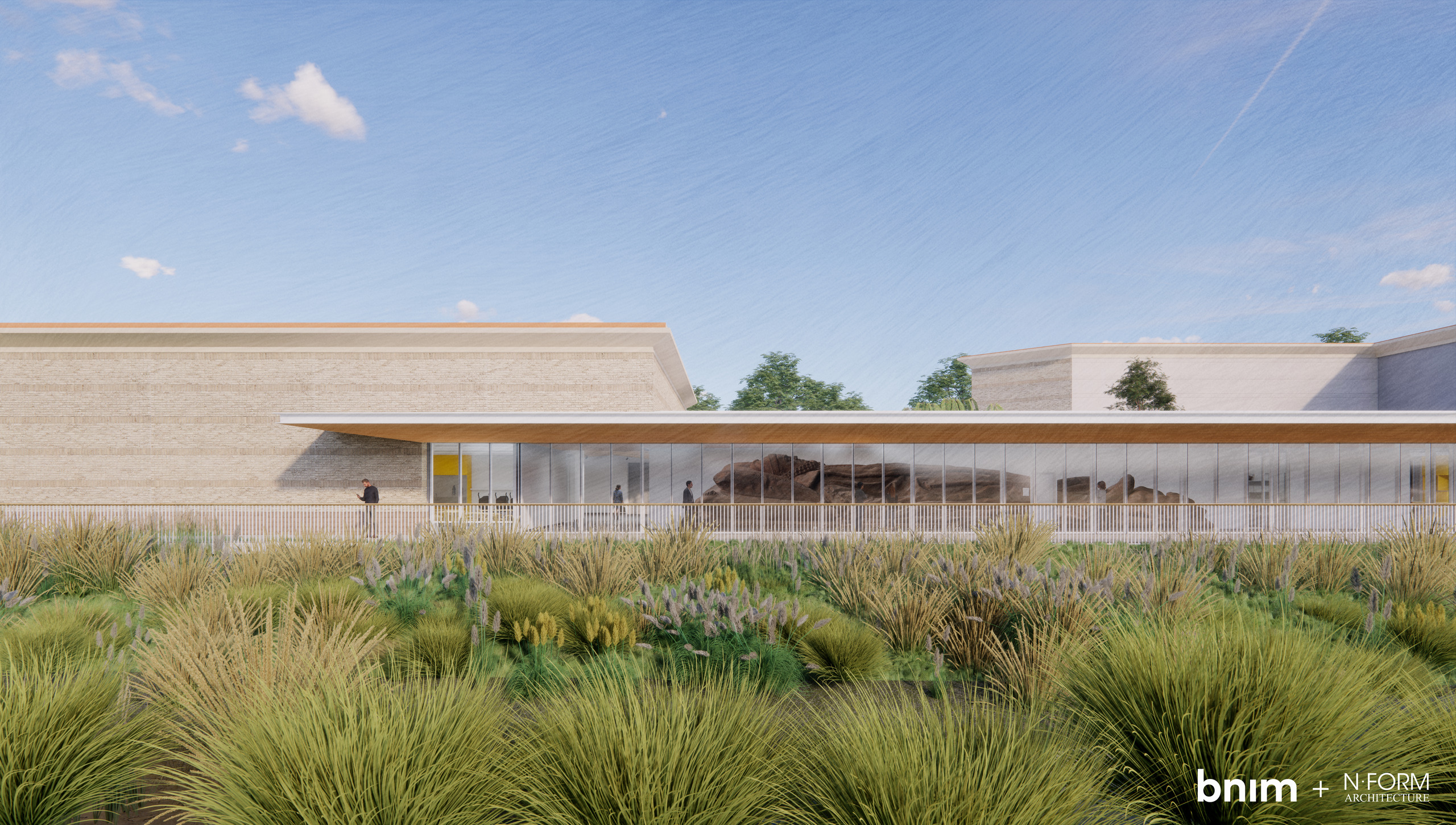
Building Inclusion + Connection: There was a growing demand for the Museum to be a more community-centered space, made more evident during the pandemic and through changing social views. Programming of curriculum, events, and the resulting design of spaces stemmed from informative conversations around universal design, accessibility to community members of all abilities, LGBTQ community, the geographic diversity of communities served, and income disparity.
The Museum is at the literal epicenter of Springfield’s demographic spectrum, with neighborhoods on the north side of the Museum starkly different from those on the south, and therefore, the Museum was presented with an even greater opportunity to create a truly inclusive, community-driven destination.
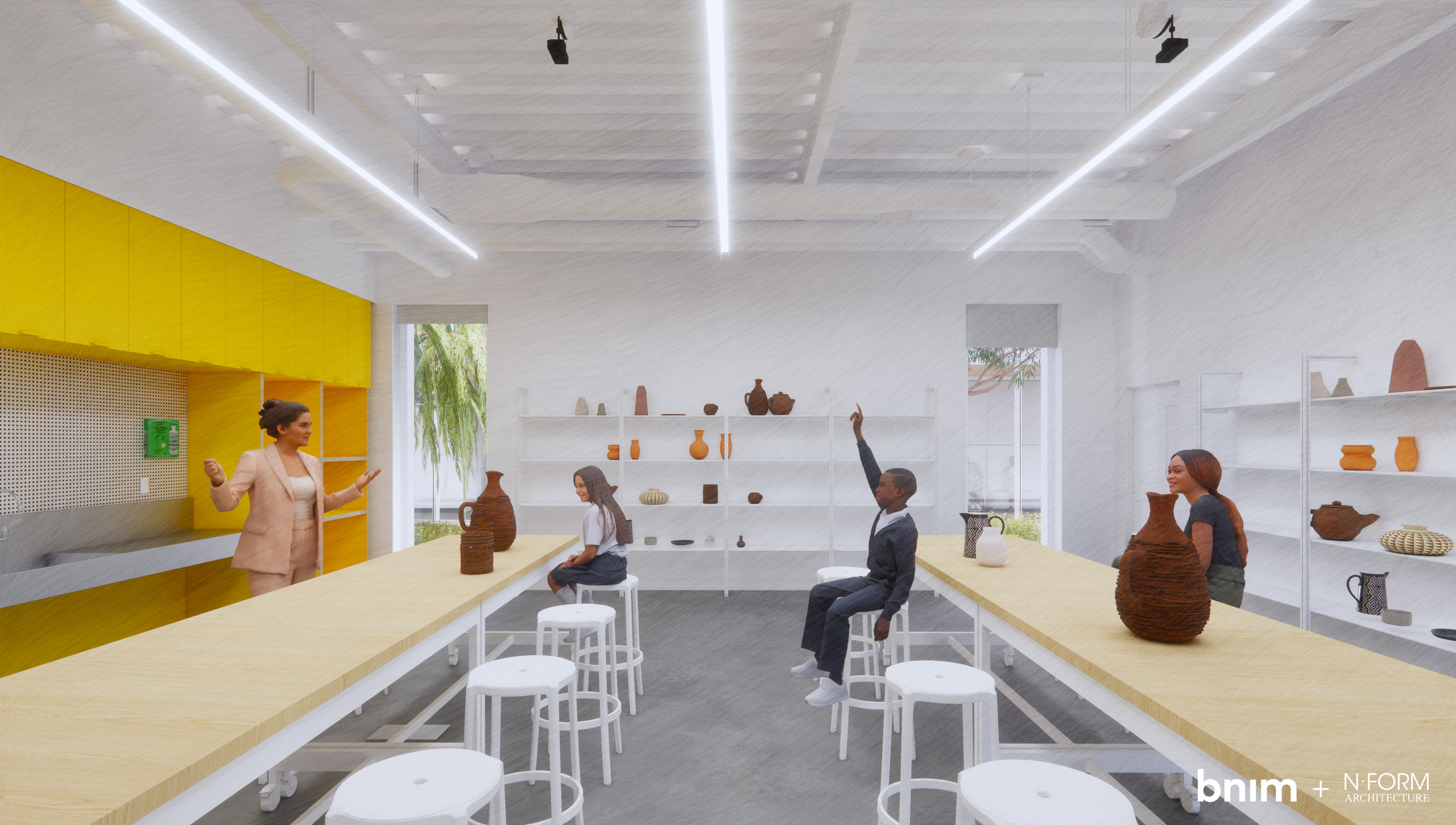
Enhancing Access: Location of the education and exhibition programs within the building were transposed to provide a more welcoming experience for the student population and to better implement equity/inclusion design goals established from re-evaluation of the master plan. In addition to providing more accessible classrooms spaces, a community room, gender-neutral restrooms, and adult changing table space were integrated into the design.
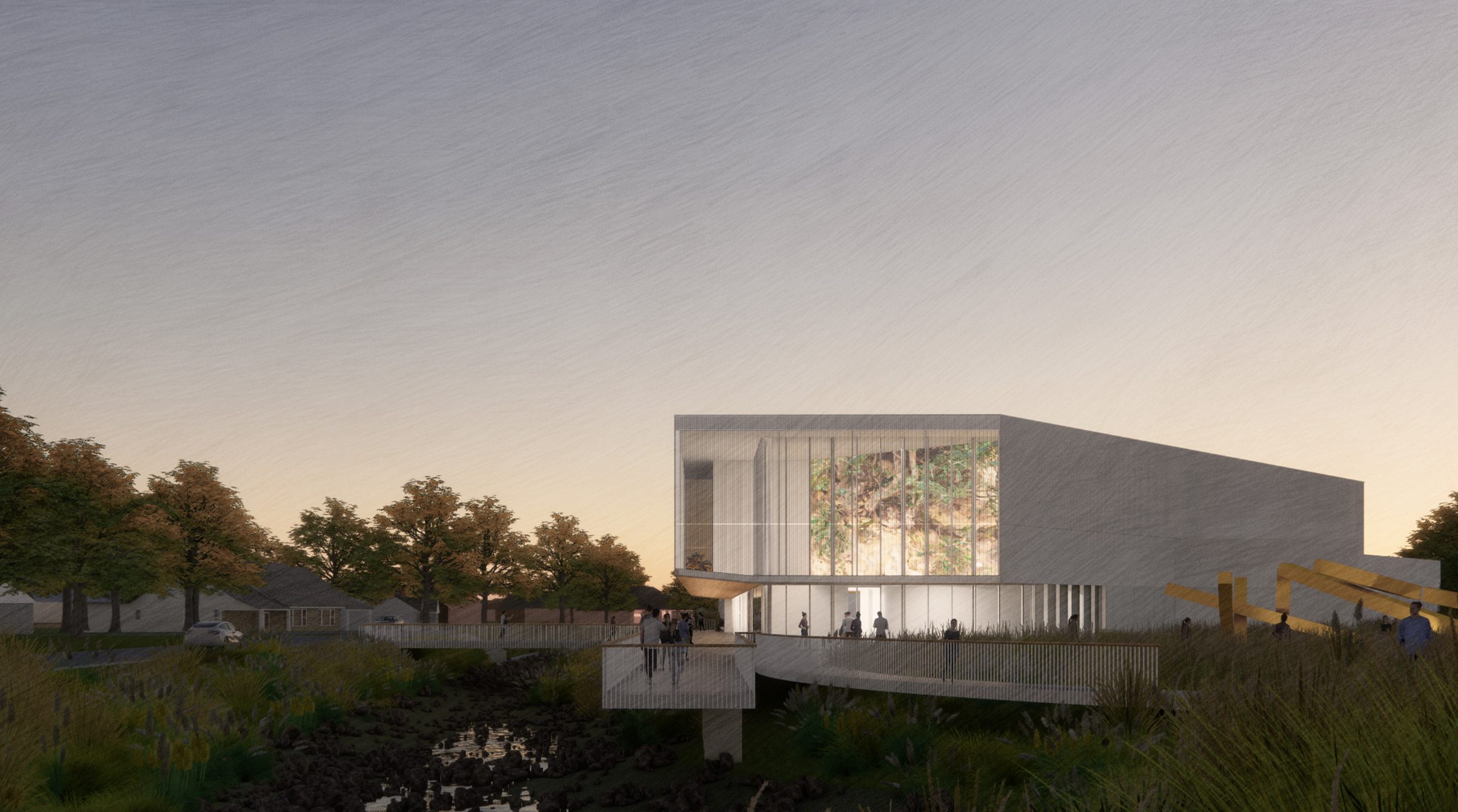
Vehicular and pedestrian access to the site also changed significantly, with the primary entry experience and treatment of the building envelope re-envisioned to engage the context of the adjacent neighborhood and to more outwardly express the Museum’s presence and intended connection to the community.
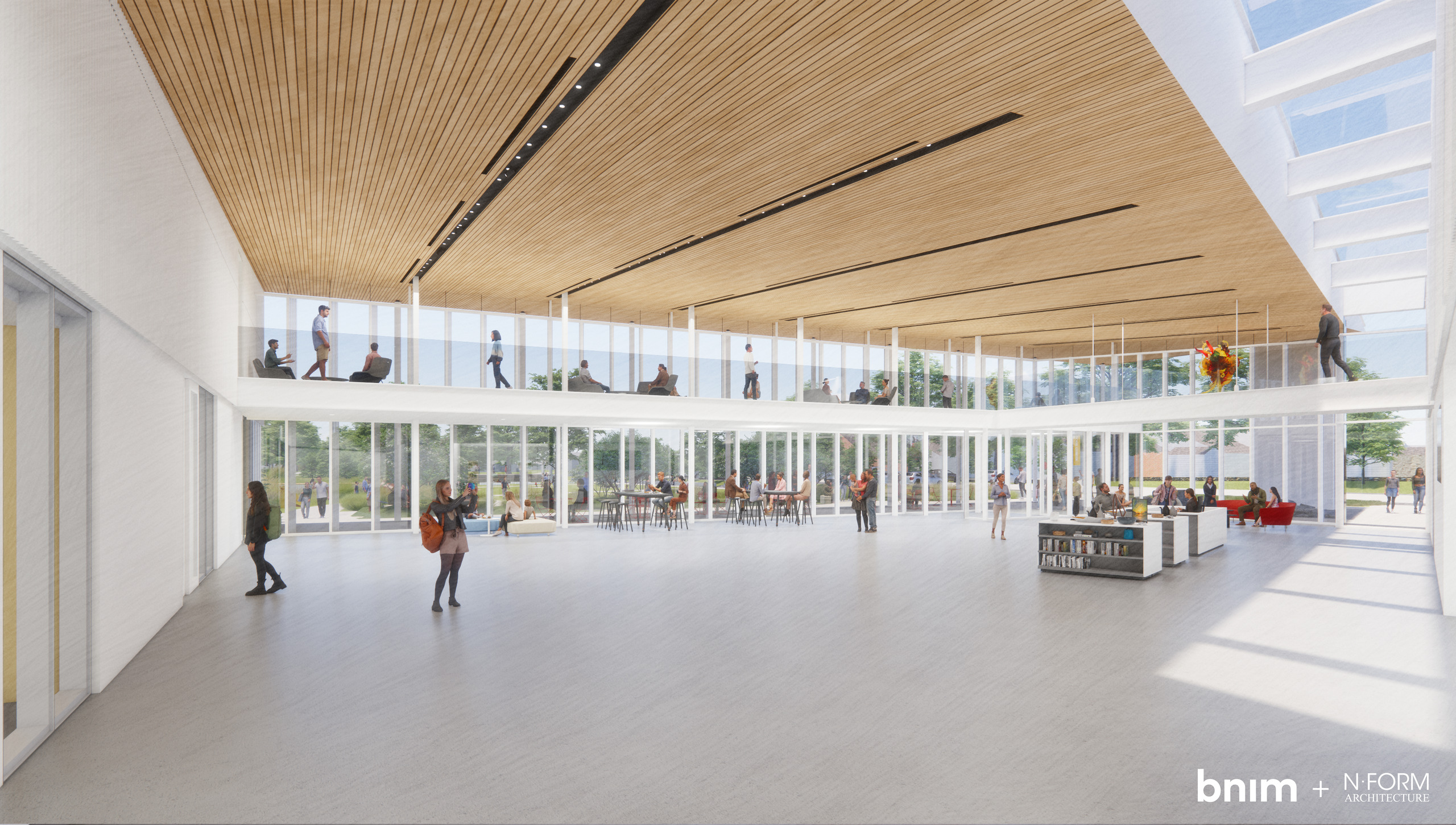
Creating Human-Purposed Space: In re-establishing the building as a community center and addressing common shortcomings in the museum building type, the design team explored societal components and design issues such as “third place” and “museum fatigue.” A phrase coined by sociologist Ray Oldenburg, a “third place” is a familiar public space where you connect with others, providing a necessary sense of belonging outside of home and work. “Museum fatigue” is the physical and/or mental weariness typical among visitors to cultural institutions. This drove design decisions with in-depth study of user experience and circulation through the Museum’s spaces.
The concept of the third place is realized in interior and exterior spaces such as the courtyard; accessible built-in seating throughout the Museum to address museum fatigue; natural daylight; a ‘nook’ space overlooking Fassnight Creek; and a grove space at the interface of the building to the west lawn.
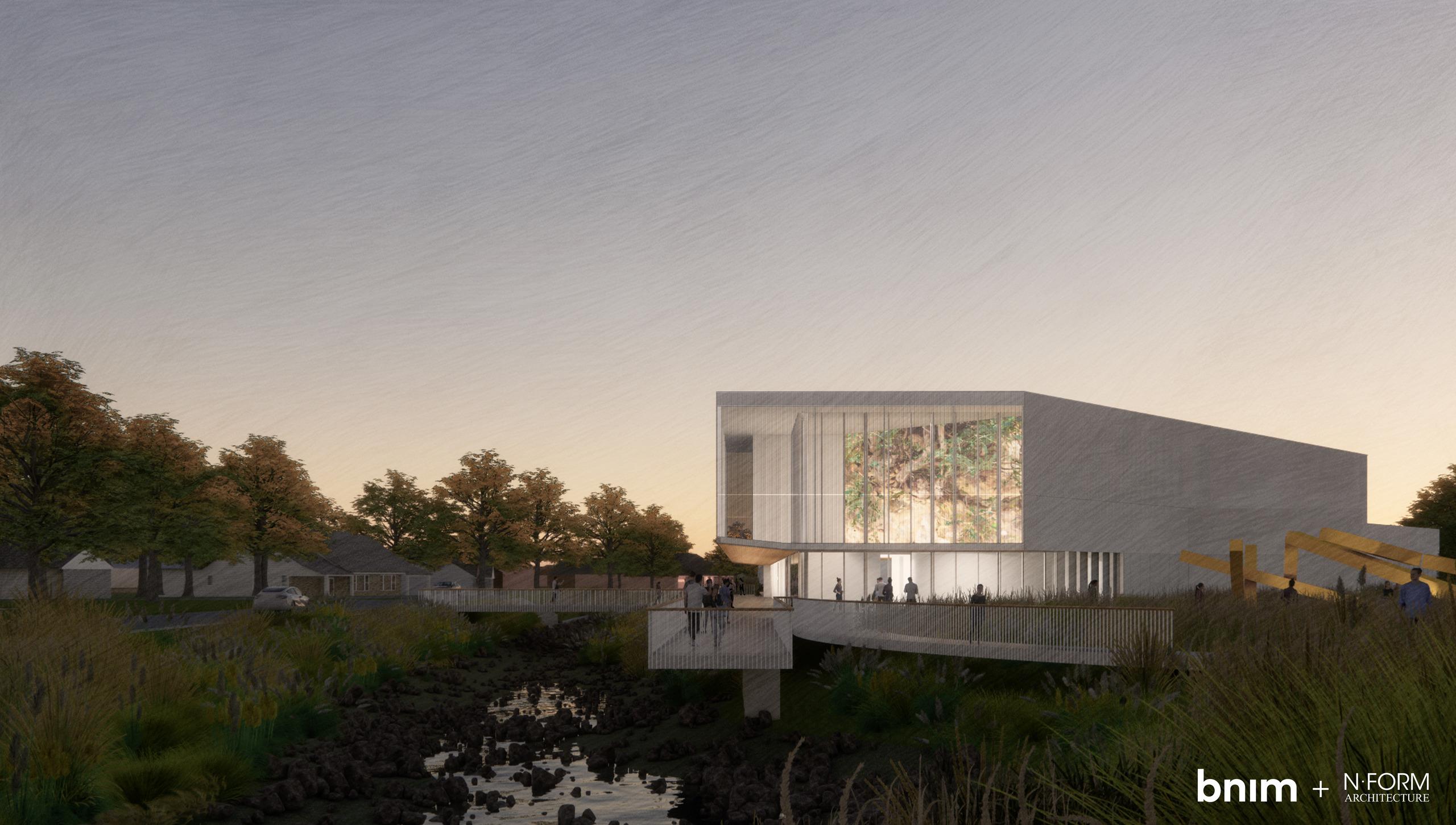
Building Belonging: In Practice
Today, the Springfield Art Museum Renovation and Expansion is in Phase 2 of design. The introspective exercise of the project’s meaning and civic function has emphasized a shift from a museum about community to one that is of the community. The design and planning process has been characterized by Museum Director Nick Nelson as “being willing to do the unexpected.”
The ideas generated from the re-envisioning process resulted in spaces and design elements which sometimes challenged social norms and cultural differences but ultimately met the goals of maximizing outreach and providing a welcoming and accessible museum for all.
The re-thinking of the original masterplan resulted in a more inclusive, resilient, and transformative design that addressed changing perceptions, yet remained true to the master plan’s original values – character of place, inclusive, innovative, and connected to nature.
“Be visionary – not apologetic.” – Nick Nelson, Museum Director